In the ever-evolving world of manufacturing, where precision and reliability dictate performance, the smallest components often bear the heaviest responsibilities. One such unsung hero of engineering is the collar rivet—a fastener that ensures every connection stands strong against time, pressure, and motion.
At Surinder Rivets Industries, a trusted manufacturer and supplier of collar rivets, innovation meets metallurgical precision. These rivets aren’t just mechanical connectors; they are structural guardians, silently holding together frameworks in automobiles, machinery, aircraft, appliances, and more.
This article explores how collar rivets redefine structural integrity, delving deep into their composition, mechanical properties, manufacturing processes, and application-driven performance.
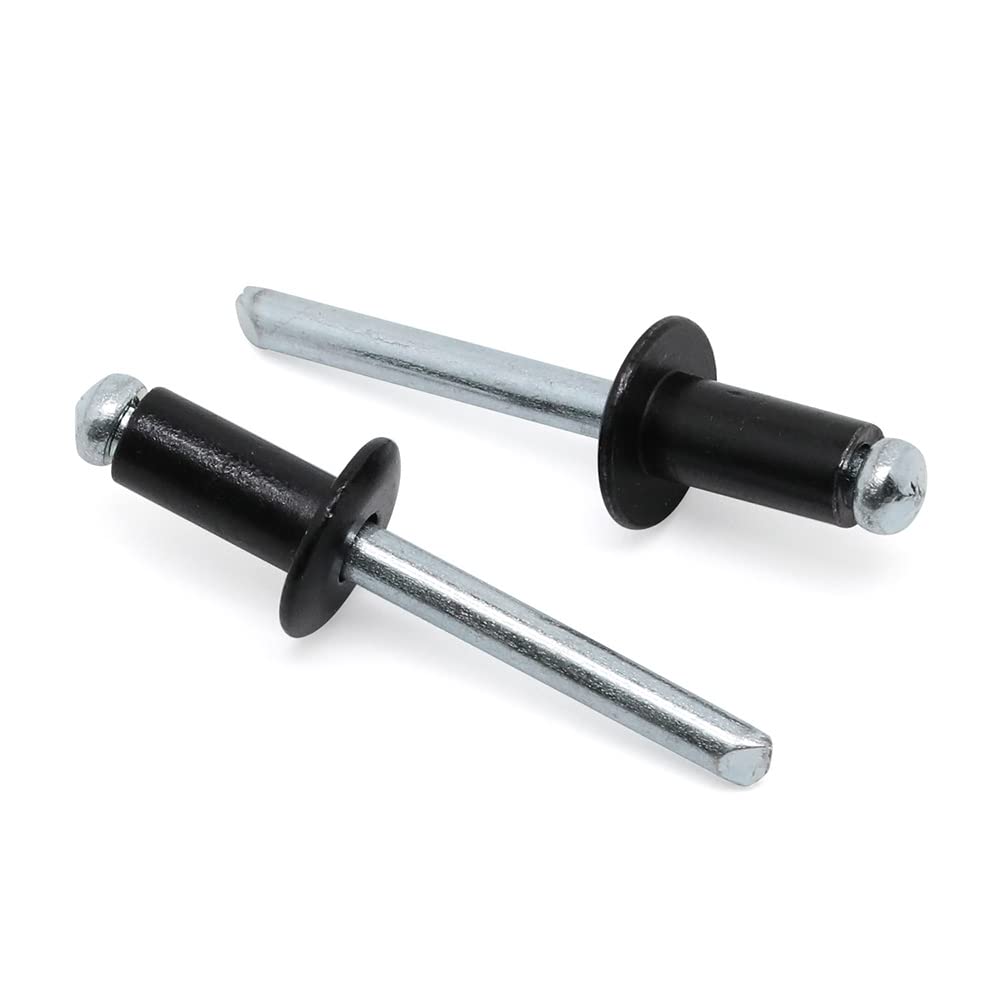
Collar rivets, often referred to as lockbolts or swaged rivets, are advanced fastening components that provide a permanent, vibration-resistant joint between metal parts. Unlike conventional bolts or screws that rely on threads, collar rivets use a mechanical locking process—ensuring zero loosening over time.
The design typically includes:
This unique assembly results in a high-tensile, tamper-proof, and fatigue-resistant joint that outperforms traditional fastening systems.
Collar rivets are designed to withstand both tensile loads (pulling forces) and shear loads (sideways forces). The uniform load distribution across the joint prevents material distortion, maintaining stability under dynamic conditions—critical in vehicles, machinery, and infrastructure.
Where vibration is constant—such as in heavy-duty machines or automotive engines—standard bolts may loosen. Collar rivets maintain their clamping force even under repeated stress cycles, ensuring long-term safety and alignment.
Precision in manufacturing ensures each rivet achieves a consistent clamp load—a key factor for maintaining dimensional stability and preventing part separation during thermal or mechanical expansion.
Because collar rivets eliminate relative movement between fastened components, they drastically reduce fatigue failures. The rivet absorbs mechanical energy, extending the lifespan of both the joint and the materials it connects.
At Surinder Rivets Industries, material selection is a science of balance—combining strength, ductility, and corrosion protection. The company manufactures collar rivets using aluminum, mild steel, stainless steel, copper, and brass, each serving distinct industrial applications.
| Material | Key Characteristics | Common Applications |
|---|---|---|
| Aluminum Alloy | Lightweight, corrosion-resistant, non-magnetic | Aerospace, automotive interiors |
| Stainless Steel | High strength, temperature resistance, rust-proof | Marine, heavy machinery |
| Mild Steel | Cost-effective, easy to machine, durable | Structural frameworks |
| Brass and Copper | Excellent conductivity and anti-corrosion | Electrical and electronic assemblies |
Each batch undergoes rigorous metallurgical testing—from microhardness and grain structure analysis to tensile strength evaluation—ensuring compliance with global mechanical standards.
The journey of a collar rivet from raw metal to finished fastener involves several high-precision stages, each monitored for consistency and performance.
Selected metal rods are tested for purity, tensile strength, and grain alignment. This step ensures that raw material quality supports high-stress applications.
In high-speed cold heading machines, the rivet’s head and shank are shaped under immense pressure—without heating. This process enhances grain flow and improves mechanical strength.
The shaft undergoes precision machining to form serrations or grooves that interlock with the collar. Micrometer-level accuracy ensures a tight, vibration-proof grip.
Heat treatment enhances hardness and tensile properties. Surface coatings such as zinc plating, anodizing, or passivation add corrosion resistance and aesthetic finish.
Every rivet is tested for dimensional accuracy, shear strength, and load capacity using automated gauges and tensile testing machines. Only those that meet stringent parameters are approved for dispatch.
Collar rivets find applications in virtually every sector where strength, reliability, and permanence are paramount.
| Feature | Collar Rivets | Traditional Bolts & Screws |
|---|---|---|
| Joint Security | Permanent and tamper-proof | Loosens under vibration |
| Load Distribution | Uniform across the surface | Concentrated on threads |
| Maintenance | Zero maintenance required | Periodic tightening needed |
| Installation Speed | Quick swaging operation | Slower manual process |
| Aesthetic Finish | Clean, flush design | Protruding head and threads |
This combination of efficiency, durability, and design precision makes collar rivets indispensable for industries demanding mechanical excellence.
Modern manufacturing emphasizes not only performance but also sustainability. Surinder Rivets Industries integrates eco-conscious methods throughout its production:
By balancing performance and environmental responsibility, the company reinforces its role as a future-ready Manufacturer and Supplier.
Each rivet from Surinder Rivets Industries is a testament to precision engineering and strict adherence to international quality norms, including:
Rivets undergo:
This uncompromising attention to quality ensures the rivets deliver long-lasting structural reliability in every application.
Every industry has unique mechanical demands, and Surinder Rivets Industries meets them with custom-engineered collar rivets designed to match specific parameters such as:
These tailor-made solutions give OEMs and industrial clients the flexibility to optimize assembly design and efficiency.
As a Manufacturer and Supplier with years of expertise in industrial fastening, Surinder Rivets Industries stands out through:
The company’s reputation is built on trust, precision, and commitment—ensuring every rivet carries the strength of its legacy.
From the frame of a car to the skeleton of a bridge, collar rivets silently uphold the strength of civilization. Their engineering brilliance lies in simplicity—a mechanical bond perfected through decades of metallurgical understanding and innovation.
With Surinder Rivets Industries leading the way as a Manufacturer and Supplier of Collar Rivets, industries gain more than a fastening solution—they gain reliability, performance, and peace of mind.
As technology advances, one truth remains constant: a structure is only as strong as its connections, and collar rivets ensure those connections never fail.
1. What makes collar rivets different from traditional rivets or bolts?
Collar rivets offer a permanent, vibration-resistant joint that eliminates the loosening issues common with bolts and nuts. Their design ensures superior load distribution and longer service life.
2. Can collar rivets be used in high-vibration environments?
Absolutely. Their swaged-lock mechanism provides exceptional resistance to vibration and fatigue, making them ideal for automotive, aerospace, and heavy machinery use.
3. What materials are most commonly used for manufacturing collar rivets?
Aluminum, stainless steel, mild steel, brass, and copper are typically used—each selected for specific environmental and mechanical requirements.
4. Do collar rivets require maintenance after installation?
No. Once installed, collar rivets require zero maintenance, making them ideal for applications where accessibility is limited.
5. Can Surinder Rivets Industries provide custom-sized collar rivets?
Yes. The company offers full customization in terms of size, head shape, collar type, and material composition, tailored to specific industrial needs.
6. What standards do Surinder Rivets Industries follow?
All products adhere to ISO, DIN, and ASTM standards for quality, safety, and performance consistency.
7. How can I request a quotation or bulk order?
Clients can contact the technical sales team at Surinder Rivets Industries for custom quotations, bulk supply details, or engineering consultations.